News
Exciting collaboration ahead: project LIPOSMART
29 September 2026
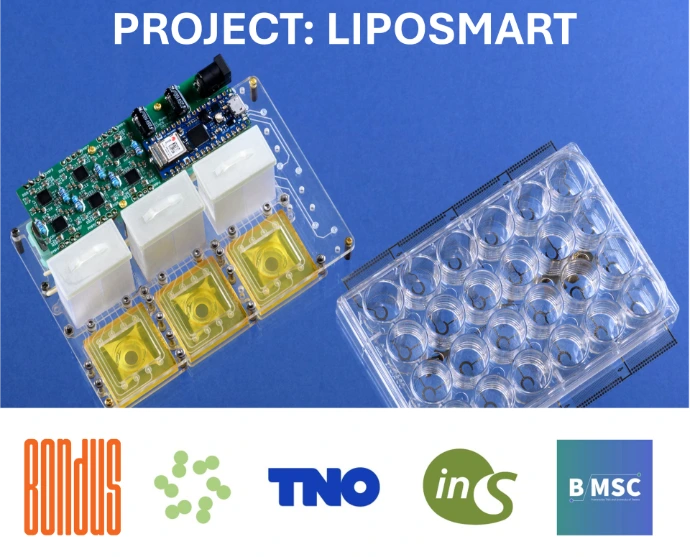
Bondus is joining forces with TNO, LipoCoat, InSphero (CH), and B/MSC in the LIPOSMART project, which focuses on developing coatings and hardware for three-dimensional tissue culture. The project aims to improve microphysiological systems for drug research and support the development of a solution that can be scaled from laboratory use to production.
Project LIPOSMART
The main goal of the project is the development of coatings for microphysiological systems, a laboratory device that grows cells in 3D environments to mimic real organs and tissues of the human body. The coating is required to reduce unwanted interactions between cells, medicines, and materials, while keeping miniature tissues controlled and securely positioned in the device. The result is a more stable and dependable test system for pharmaceutical research.
Requirements from the pharmaceutical market are taken into account during development to ensure that the solution meets the needs of future users and can be efficiently scaled for production. This makes it a valuable asset in the development of new medicines.
Bondus’
role
LIPOSMART
is a direct match with our capabilities in manufacturing microfluidic devices,
such as organoid and spheroid well plates. Bondus’s role in the project will be
the production of the hardware for the laboratory device and the deposition of
the coatings developed by LipoCoat in its microstructures.
Precision foil cutting for microfluidics
24 September 2026
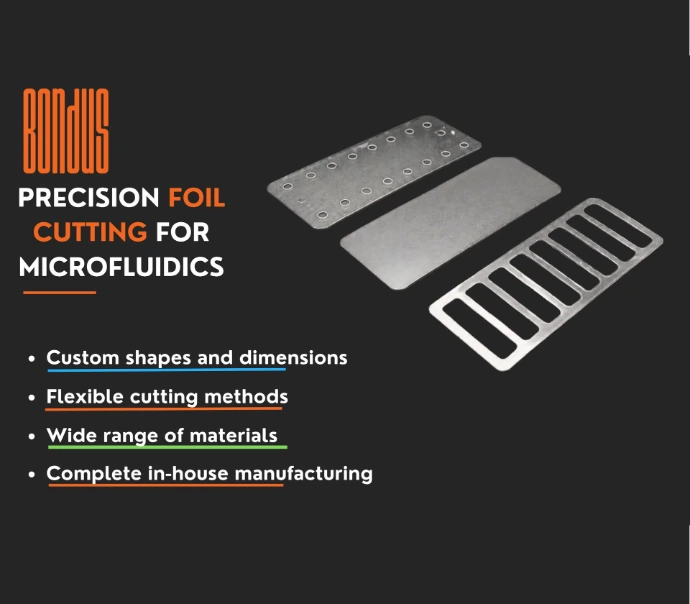
Bondus now offers in-house foil cutting for microfluidic applications, providing custom-cut components in different materials, shapes, and dimensions. The service is designed to support both prototype development and series production, with foil preparation carried out as part of the company’s broader manufacturing process.
That’s why Bondus handles foil preparation in-house, delivering precisely cut, ready-to-use components that can be easily integrated into the final product.
Our foil cutting services includes?
- Custom shapes and dimensions – based on technical drawings and specifications
- Wide range of materials – COC, COP, PMMA, PSA, and more available from stock
- Flexible cutting methods – through-cutting or kiss-cutting, with the option to leave the protective liner intact
- Complete in-house manufacturing– from material preparation to coating and bonding, we ensure the entire manufacturing process takes place under one roof
Whether you need a single prototype or a series of components, our goal remains the same: deliver precisely prepared materials that are ready for your next manufacturing step.
Looking for a partner to supply custom foils for your microfluidic product. Contact us.
What if one dispensing system could handle 8 different liquids?
17 September 2026
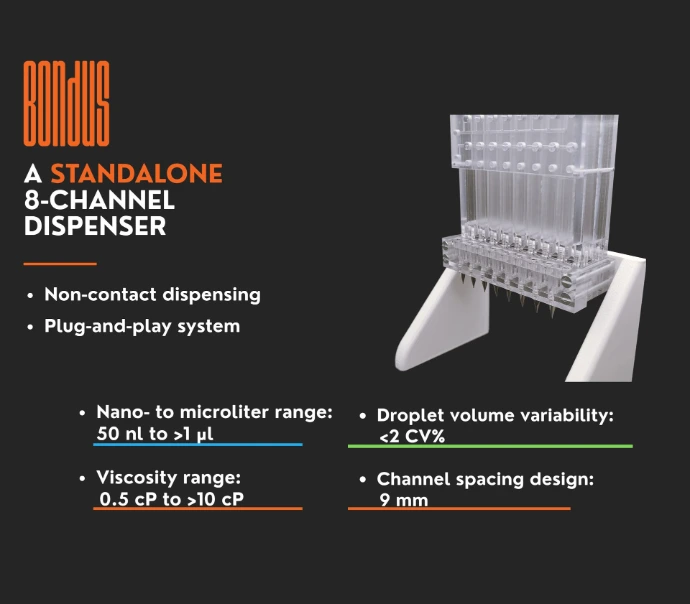
Bondus and Staiger (DE) have partnered to develop an innovative nanoliter dispensing module. With eight individually controlled channels, the system enables precise, well-by-well functionalisation of 96-well plates.
Integrated reservoirs provide up to 10 mL per channel, while external liquid sources can be connected for longer automated runs. The system requires only compressed air and can be integrated with common automation solutions, including gantries and robotic arms.
Fruitful collaboration
Want to explore how this dispensing manifold could fit your application?
New in our manufacturing toolbox: plasma surface treatment
10 September 2026
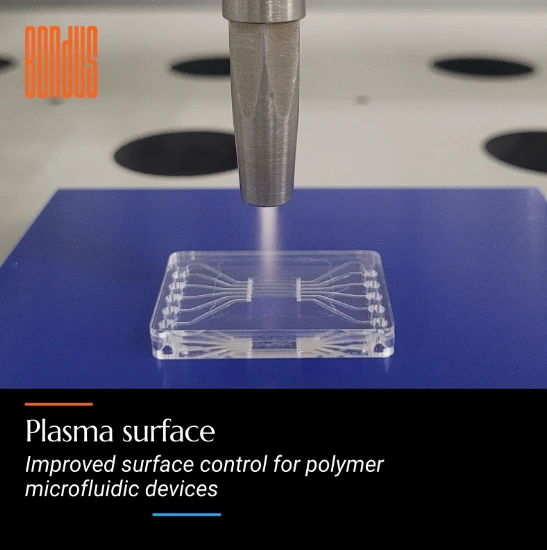
Bondus has added atmospheric plasma surface treatment to its manufacturing capabilities for polymer microfluidic devices. This cost-effective process improves surface wettability, adhesion, and cleanliness, supporting more consistent and reliable manufacturing.
Therefore, Bondus has added plasma surface treatment to its toolbox: a cost-effective solution to improve surface wettability, adhesion, and cleanliness during the manufacturing of polymer devices.
Why use plasma surface treatment?
- Wettability - Makes surfaces more hydrophilic, supporting fluid flow
- Adhesion - Improves coating adhesion and bonding
- Cleanliness - Removes organic contaminants at a microscopic level without physical contact
The increase in wettability and the stability of the hydrophilic property are not only material-dependent but also grade-specific. The reduction in hydrophilicity can be minimized by sealing the material in airtight pouches or under nitrogen.
Atmospheric plasma treatment at Bondus
At Bondus, we use atmospheric plasma treatment because it is cost-effective and suitable for automation and in-line production. For microfluidic and polymer-based applications, better surface control can mean more consistent and reliable manufacturing.
Could plasma treatment improve your product's performance?
Discover how Bondus implements plasma surface treatment for microfluidic manufacturing.
Plasma surface treatment at Bondus
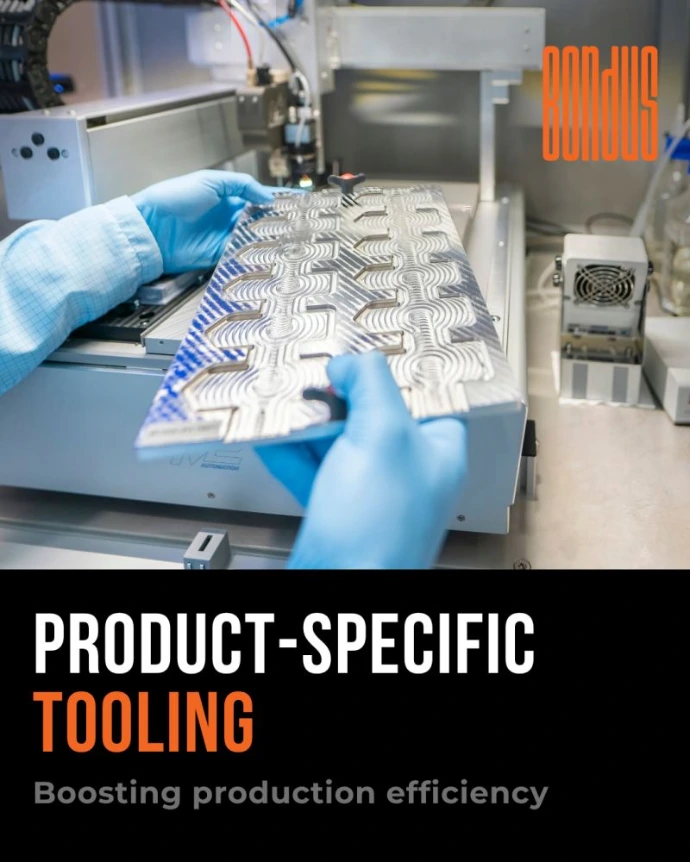
Boosting production efficiency with product-specific tooling
3 September 2026
As manufacturing moves from prototyping to recurring production, dedicated tooling becomes increasingly important. Bondus has invested in the machinery needed to create custom tooling in-house, helping our customers make the transition to scalable production more seamlessly and at an earlier stage. Product-specific solutions can help streamline processes, improve throughput, and reduce production costs.
At Bondus, we design tooling with scalable production in mind. Our approach focuses on:
- Poka-yoke - Incorporating poka-yoke design principles to reduce operator errors
- Machine throughput - Maximizing machine capacity to increase throughput
- Workholding - Integrating dedicated workholding to streamline production
We design and manufacture our custom tooling in-house, ensuring a fast transition from prototyping to full-scale production. Depending on the application, tooling is manufactured from materials such as aluminum, stainless steel, POM, or PEEK, selected to meet chemical requirements and withstand extended production runs.
Learn how tooling development is part of our contract manufacturing services:
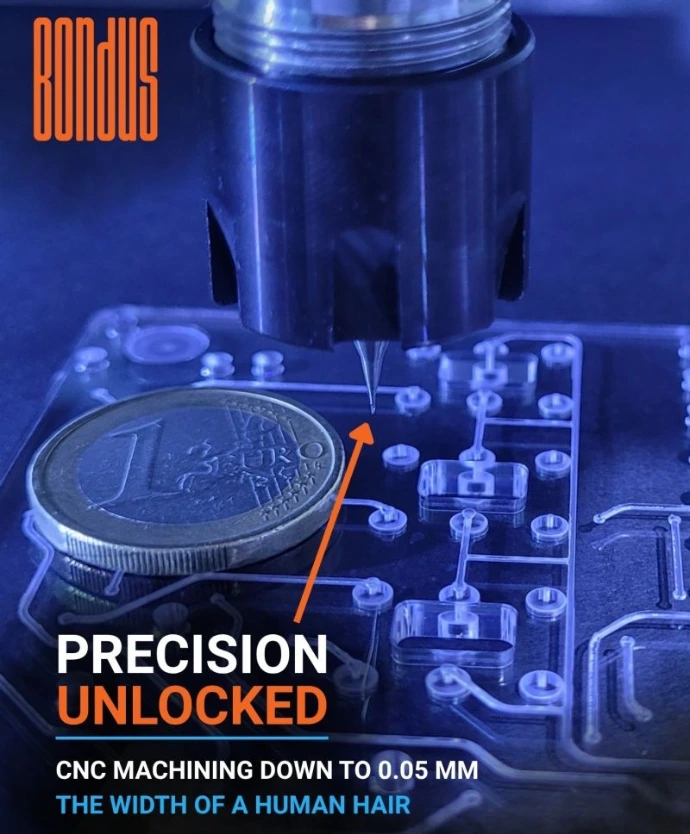
Precision unlocked: CNC machining for microfluidics down to 0.05 mm
27 August 2026
CNC machining offers a flexible way to produce polymer components to virtually any design. Bondus now has the capability to produce features as small as 0.05 mm: smaller than the width of a human hair. This makes CNC machining particularly suitable for prototyping and low-volume production of microfluidic parts, where precision and flexibility are key.
Why CNC machining for microfluidics?
- Flexibility in prototyping - Iterate and refine designs before finalization, making it ideal for rapid prototyping
- Cost-effective small volumes - With smart fixturing, CNC machining can be a budget-friendly option for low-volume production
- Material versatility - Experiment with a wide range of engineering polymers. Bondus has experience in machining most engineering polymers, including COC, COP, PP, PC, PMMA, PS, and PEI
Could CNC machining be the right starting point for your microfluidic product?
Discover our CNC machining capabilities
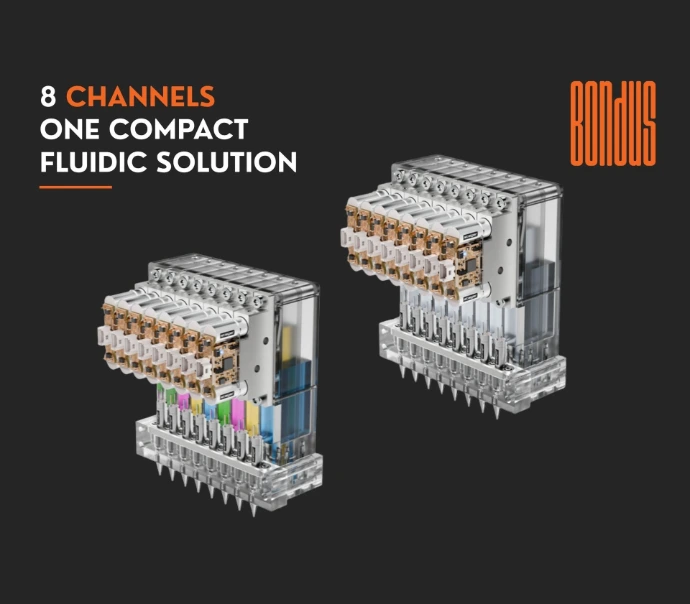
Coming soon: 8-channel nanoliter dispener
21 August 2026
Bondus and Staiger (DE) have been working together on a compact liquid dispenser designed for precise, non-contact dosing in the nanoliter range. The system is designed to handle different liquids and dispensing volumes within a single setup, with manifolds made by Bondus and all electronics by Staiger.
Key features:
- 8 individually controllable dispensing channels
- Compatible with the 9 mm pitch of standard well plates
- Integrated reservoirs in a compact module design
Why individual control of each channel?
To be able to dispense liquids with a wide range of physical characteristics (e.g. viscosity, surface tension) or to dose different volumes within a single setup.
The manifolds are made of polymers chosen for their excellent chemical resistance, biocompatibility, and transparency, and can be customized to fit specific fluidic requirements.
Looking for a dispensing solution for your application?
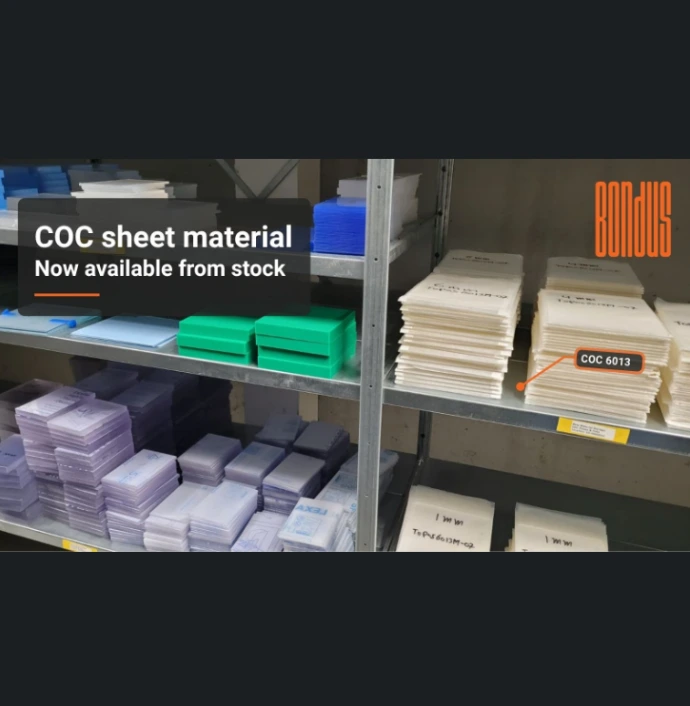
COC sheet material now available from stock
18 August 2026
To give customers more flexibility when selecting materials, Bondus now has COC sheet material in stock. This high-performance polymer can be used for custom microfluidic chips and manifolds, with dimensions and thicknesses suited to a range of applications.
Selecting the right polymer is essential to the performance of a microfluidic product. Each material has its own properties and limitations. We therefore help our customers select the material that best suits their application.
Available COC sheet material:
- Dimensions up to 140 × 180 mm
- Thicknesses from 1 to 6 mm
- Grade 6013 available from stock
- Grade 8007 available on request
Simplifying fluid and gas networks with compact manifolds
30 July 2026
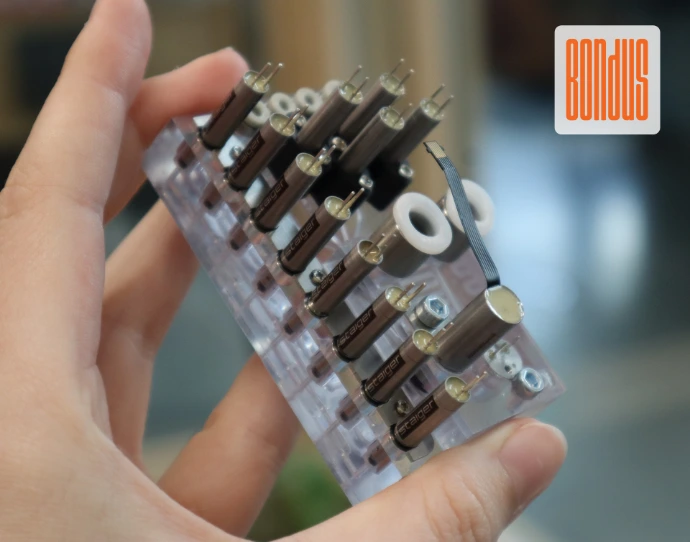
Complex fluid and gas networks can take up valuable space in diagnostic and analytical systems. Bondus now has the manufacturing capabilities to produce complete manifolds in-house. This includes everything from processing raw materials and bonding the layers to OEM integration with valves, sensors, electronics, and connectors.
Read more about our microfluidic OEM integration capabilities:
Microfluidic OEM integration
Bondus expands its technology toolbox for hybrid bonding of microfluidic devices
14 July 2026
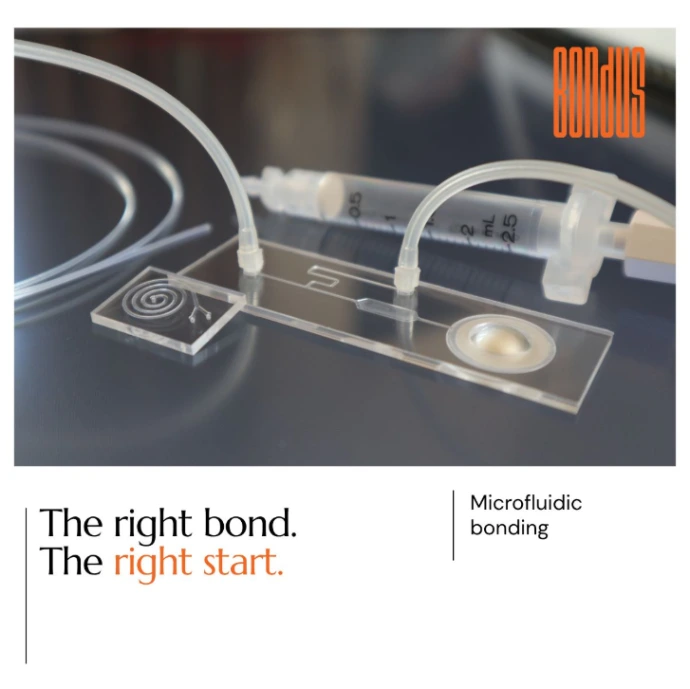
Bondus is expanding its range of bonding technologies, giving customers more options for developing and manufacturing microfluidic devices. Available technologies now include Bondus' Direct Bonding, adhesive bonding, thermal bonding, ultrasonic welding, and pressure-sensitive adhesive foils.
The right bonding method for scalable microfluidics
The choice of bonding method impacts far more than just the seal between layers. It also influences material selection, microchannel integrity, pressure resistance, and ultimately, the manufacturability of the microfluidic device.
At Bondus, we select the right bonding approach early in the development process. Every material, fluidic design, and application requires careful consideration. What works well for a prototype should also support the next step towards reproducible manufacturing.
Available bonding technologies:
- Bondus Direct Bonding method
- Adhesive bonding
- Thermal bonding
- Ultrasonic welding
- Pressure sensitive adhesive foils
Learn more about our microfluidic bonding capabilities:
Custom well plates for advanced cell culturing
9 July 2026
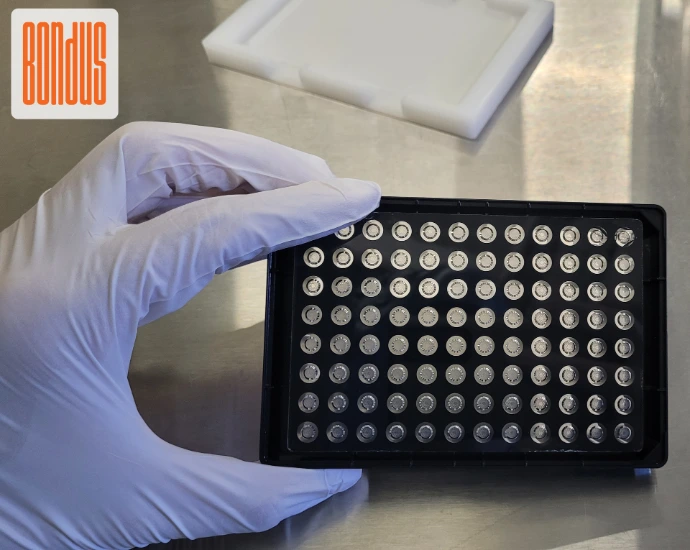
Advanced cell research often requires more than a standard well plate. Bondus develops and manufactures custom microfluidic well plates that add application-specific functionality while maintaining the familiar format used in the laboratory.
Bondus has succeeded in making custom microfluidic well plates for applications such as organoid and spheroid culture, organ-on-chip research, and drug testing. By integrating microfluidic structures into standard 96- and 384-well SBS formats, these plates combine customised functionality with a familiar laboratory format.
Designed for specific applications
Depending on the application, the plates can include:
- Micro-cavities for controlled cell and organoid culture
- Seeding chambers and membranes
- Inter-well channels and customized fluidic pathways
- Features for controlled fluid flow and media exchange
These solutions can support applications ranging from organoid culture and drug screening to disease modelling and personalized medicine.
Looking for a custom well plates and want to learn more about our manufacturing approach?
Polymer-to-glass bonding
2 July 2026
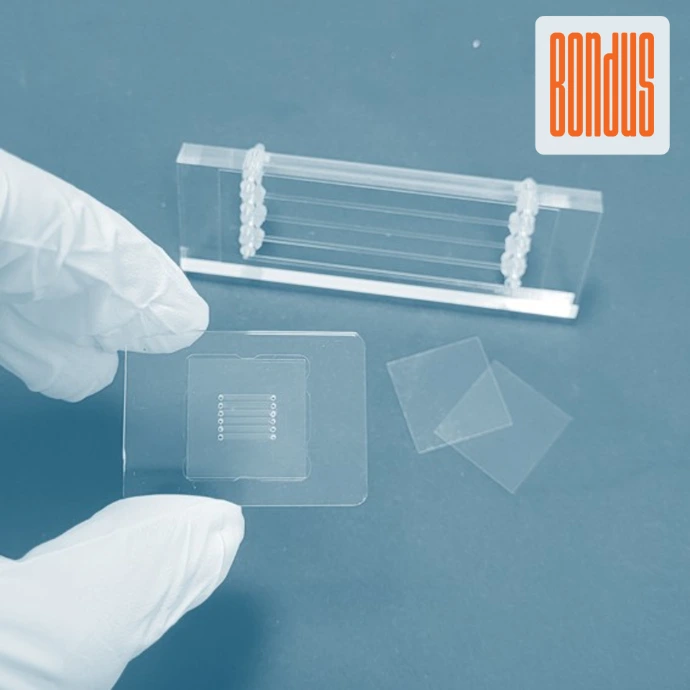
Bondus has expanded its bonding capabilities to combine polymers and glass in microfluidic devices where optical transparency is important. This combines the optical and chemical properties of glass with the flexibility of polymers for microstructuring and functionalisation.
This lab-on-a-chip is a perfect example: a 140 µm thick glass cover is bonded with a COC or PMMA substrate. Bonding is performed using an adhesive specifically designed to remain optically transparent after curing.
Why polymer and glass in one device?
- Hybrid bonding of glass to polymers creates optical windows for microscopy or imaging applications;
- While glass is chemically inert, flat and has excellent optical characteristics, polymers can be more easily micro-structured and (bio)functionalised;
- Glass-glass bonding requires very high temperatures. Bondus can bond glass to polymers at room temperature, keeping production simple and cost-effective.
Interested in polymer-to-glass bonding for your microfluidic application?
Get in touch with Bondus to discuss your requirements.
Contact us
Major milestone achieved: Bondus is ISO 13485 certified
25 June 2026
We are proud to announce that Bondus has officially received its ISO 13485 certification, marking an important step in our quality management and supporting the continued growth of our manufacturing activities.
This certificate demonstrates our commitment to quality, regulatory compliance, and continuous improvement in manufacturing medical devices and in vitro diagnostic devices. With our QMS now fully operational, we have set up a solid foundation for scaling production while consistently delivering high-quality products.
Find the full scope and download the certificate here:
Construction underway: Bondus expands its cleanroom space
16 June 2026
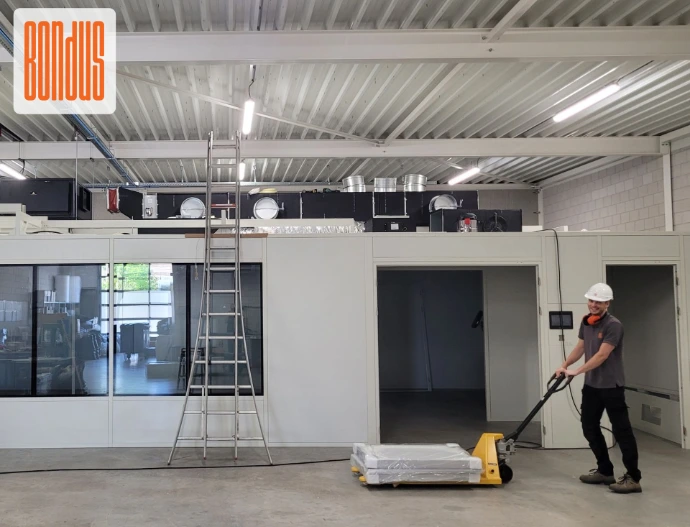
Rome wasn't built in a day. A cleanroom certainly isn't either! Once completed, our new ISO 7 cleanroom will increase Bondus' production space fivefold.
There is still plenty of work to do before the cleanroom is ready for production. The next steps include completing the interior, installing the required systems and equipment, and carrying out the necessary validation to ensure the space meets the required standards.
Why is production in a cleanroom important?
A cleanroom provides a controlled production environment where contamination and environmental conditions can be carefully managed. For Bondus, this is particularly important when manufacturing microfluidic devices and carrying out sensitive processes such as micro-dispensing.
- ISO 7 particle cleanliness: Controlled air quality helps minimise contamination from dust and other particles during production.
- Temperature and humidity control: Stable environmental conditions help ensure that micro-dispensing processes, including the application of coatings and biomarkers, remain repeatable and consistent.
Once completed and validated, the new cleanroom will significantly expand Bondus’ production capacity and provide additional space for scaling our manufacturing activities.
Stay up to date on the construction progress:
Expanding our material portfolio: introducing PEI
9 June 2026
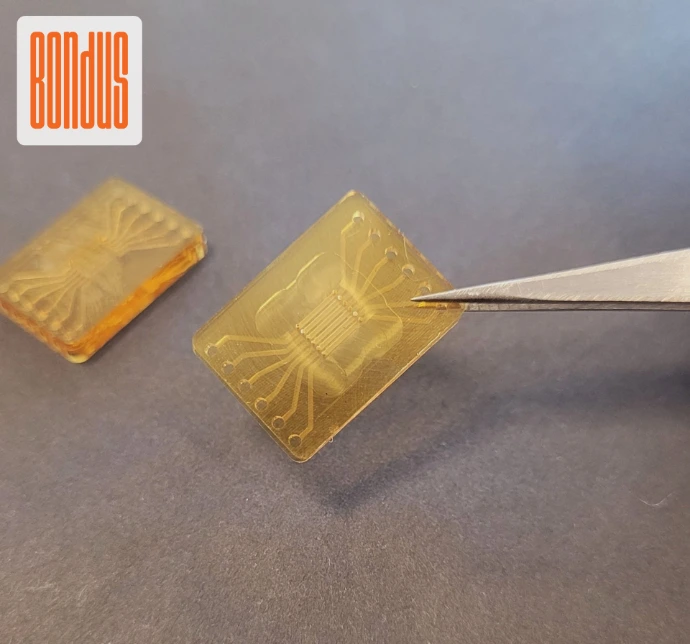
Choosing the right material can make a significant difference in the performance and durability of a microfluidic device. Bondus has added PEI (polyetherimide) to its material portfolio, opening up new possibilities for applications requiring robust components and specific chemical resistance.
With its high strength, hardness, and chemical resistance, PEI is an interesting option for robust microfluidic components and manifold products.
Why PEI?
Material selection is particularly important when microfluidic devices need to withstand different solvents or elevated temperatures. While COC and COP offer good chemical and temperature resistance, PEI provides a different balance of solvent compatibility.
- COC/COP: suitable for polar solvents such as alcohols and ketones, but less suitable for non-polar solvents such as n-heptane and aromatic solvents.
- PEI: compatible with alcohols, non-polar solvents, and most aromatic solvents, but less suitable for applications involving ketones or esters.
The right material depends on the specific fluids, operating conditions, and requirements of the application.
Want to explore our full range of materials?
Material capabilities
Looking closer: quality inspection in microfluidic manufacturing
2 June 2026
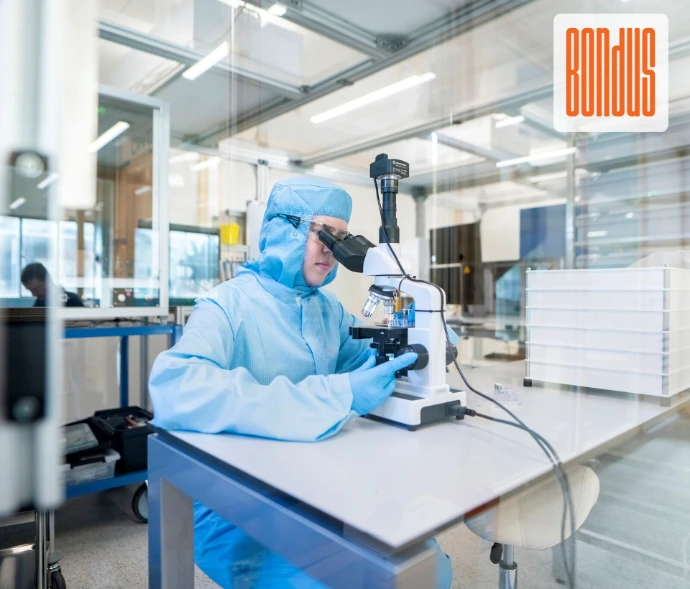
Bondus is expanding its inspection capabilities as part of its quality control in microfluidic manufacturing. With increasingly complex and miniaturised devices, detailed inspection helps verify critical features, identify deviations early, and maintain consistent quality throughout production.
As microfluidic devices become more complex, inspecting the smallest features is becoming increasingly important. At Bondus, inspection is an integral part of the manufacturing process, helping to verify critical features and identify deviations before they affect the final product.
Depending on the application and production stage, Bondus uses different inspection methods to check:
- Microchannels and features – verifying critical dimensions and geometries
- Layer alignment – checking the positioning of different layers before and after bonding
- Bonding quality – inspecting bonded surfaces and interfaces
- Dimensional accuracy – measuring components against the required specifications
- Visual quality – identifying defects or irregularities that could affect performance
Discover how Bondus supports microfluidic projects from concept to production:
Inspection in microfluidic manufacturing
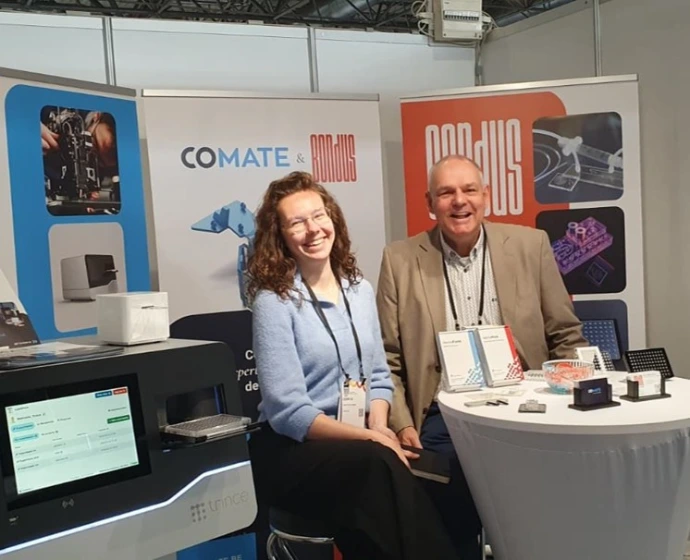
Bondus at SLAS Europe 2026: connecting with the life science community
21 May 2026
Bondus has just returned from SLAS Europe 2026 in Vienna, where we joined Comate Engineering & Design to meet professionals from across the life science and laboratory automation community. The event provided a great opportunity to exchange ideas, discuss new applications, and connect with both existing and new contacts.
Thank you to everyone who visited us at SLAS Europe 2026. We look forward to continuing the conversations!
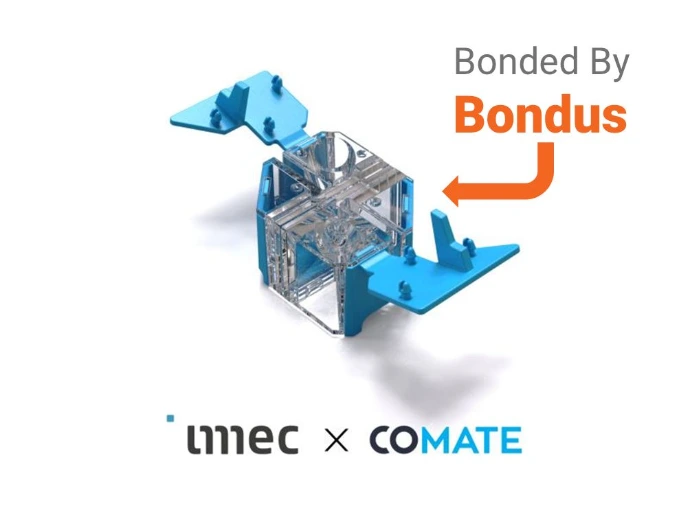
Success story: bringing nanopore technology closer to a breakthrough in proteomics
16 April 2026
Bondus is contributing to the Digiome project together with Comate (BE) and imec (BE), supporting the development of a practical system for nanopore-based proteomics. By combining nanoscale sensors with scalable microfluidic manufacturing, the project aims to bring this technology closer to real-world applications.
Nanopore technology is opening up new possibilities in proteomics, but turning nanoscale sensors into practical systems requires more than the sensor itself. Together with Comate Engineering & Design and imec, Bondus is contributing to the development of a practical system demonstrator for the Digiome project.
The project focuses on solid-state nanopores, with the aim of moving the technology beyond complex, highly manual laboratory setups towards a more accessible and cost-effective platform for developing application-relevant chemistries for proteomics and other applications.
From nanopore sensor to functional system
A key challenge is integrating nanometre-sized nanopore sensors into a compact and practical fluidic platform. Bondus supported this development by combining its scalable manufacturing platform with bonding technologies suitable for hybrid material combinations.
This approach enables:
- integration of nanoscale sensors into a practical microfluidic manifold
- Hybrid material bonding for complex device structures
- Scalable manufacturing suitable for both prototyping and future production
- A more practical system architecture for nanopore-based applications
Discover how Bondus can support your project from prototype to production.
Optimizing optical transparency in micro-machining
19 March 2026
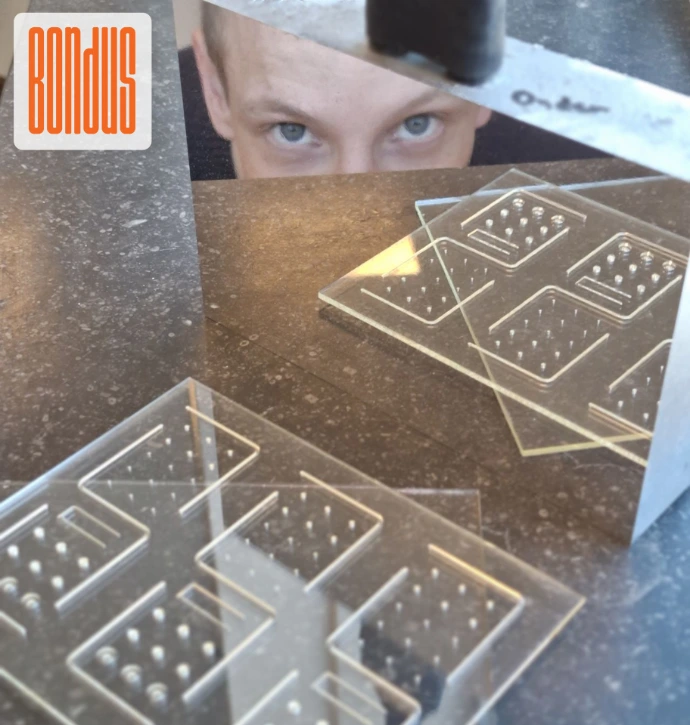
Bondus is expanding its in-house micro-machining capabilities for applications where optical transparency is critical. By optimising CNC tooling and programming, Bondus can achieve a mirror-like finish and better control the optical quality of the final product.
Micro-machining for optical applications
Bondus can machine both polymer manifolds and bonding tooling in-house, allowing greater control over the manufacturing process. For applications where optical quality is important, the parts can be machined and finished with a mirror-polished surface to support a high-quality optical finish on the bonded components.
The image shown features COC components that are part of a manifold used for the functionalisation of a standard microplate.
By combining in-house CNC machining with controlled bonding processes, Bondus can support the development of microfluidic manifolds where optical transparency, precision, and manufacturability are key requirements.
Bondus CNC machining capabilities
Bondus has moved into its new facility
12 March 2026
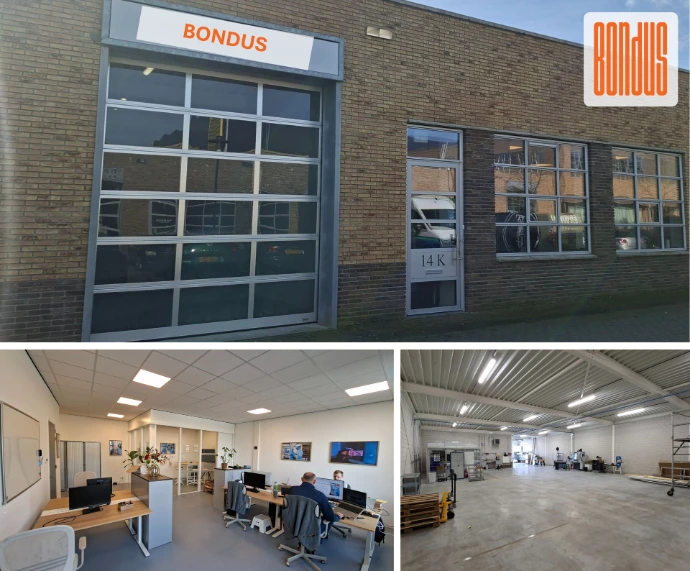
Bondus has moved into its new facility, marking an important step in the company’s growth. With more production space, room for team expansion, and a new ISO 7 cleanroom in development, the new location will provide the foundation for the next phase of Bondus’ growth.
The move marks an important step in Bondus’ growth and provides the space needed to expand its manufacturing activities.
What does the new facility bring?
- A larger production space – creating room for future manufacturing growth and support the transition to larger-scale production.
- A new ISO 7 cleanroom – the production floor is being prepared for a cleanroom that will significantly expand Bondus’ cleanroom space
- Room for team expansion – creating space to grow the team as activities continue to expand.
The production floor may still look relatively empty, but there is a good reason: the next major step is the construction of the new cleanroom.
Want to visit our new facility? Get in touch to arrange a visit.
New address: Ceintuurbaan 14K, 8024 AA Zwolle, The Netherlands
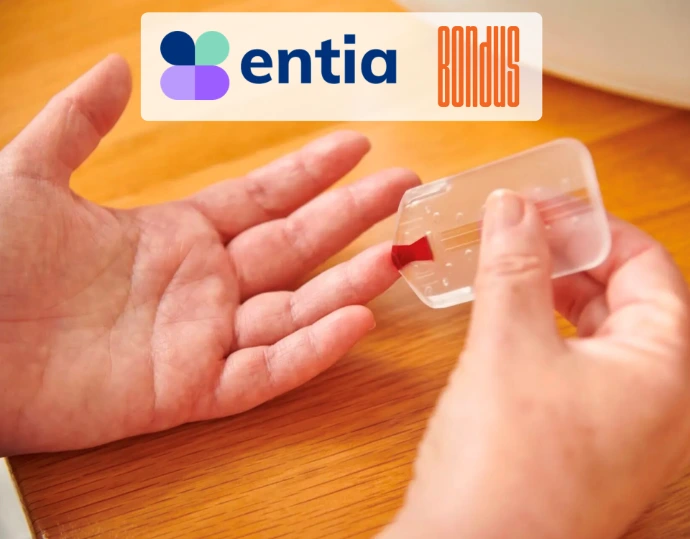
Success story: scaling production of a point-of-care blood test for cancer patient monitoring
12 January 2026
Moving a microfluidic product from development into reliable series production requires careful optimisation of both the product and the manufacturing process. Together with biotech company Entia (UK), Bondus helped transform a complex diagnostic consumable into a scalable production solution for at-home blood testing.
Bondus worked closely with Entia to move the manufacturing process from lab-scale production towards a dedicated, scalable manufacturing setup. The collaboration focused on:
Why use plasma surface treatment?
- Process re-engineering to improve manufacturability
- Optimising bonding and assembly for consistent production
- Process control and automated quality checks to improve repeatability
- Engineering a dedicated manufacturing cell for the cuvette
The result was a significant improvement in production performance. The new process achieved a massive improvement in yield, resulting in more than 50% reduction in unit cost, while providing the production capacity needed to support Entia’s market expansion.
The project highlights an important part of microfluidic manufacturing: a functional prototype is only the starting point. To reach series production, the design, bonding processes and quality control all need to work together.
Working on a complex microfluidic product and looking to scale production? Discover how Bondus can support the transition from development to manufacturing.
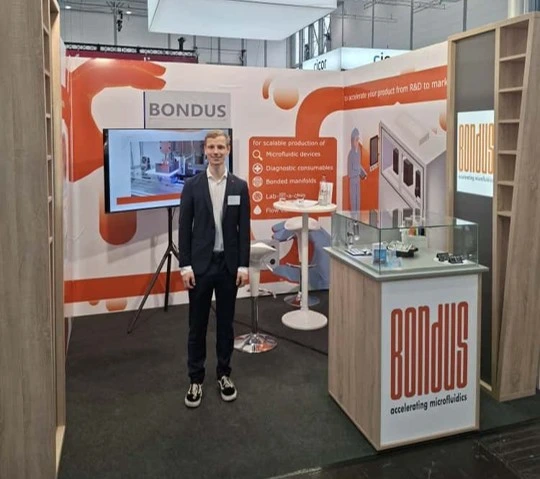
Bondus at COMPAMED 2025
20 November 2025
Bondus has wrapped up COMPAMED 2025 in Düsseldorf. It was a great opportunity to showcase our microfluidic manufacturing capabilities, meet industry professionals, and exchange ideas on taking microfluidic products from development to scalable production.
At the show, Bondus showcased its capabilities in bonding, coating, sensor integration, and micro-machining, alongside compact microfluidic manifolds with integrated Staiger micro-valves.
A key topic was scalable production. In his presentation, Bas-Jan Hoogenberg explained how Bondus’ modular production platform can support automated manufacturing without requiring dedicated equipment for every individual product.
Thank you to everyone who visited the Bondus booth and joined the conversations. We look forward to continuing the discussions beyond COMPAMED.
Missed us at COMPAMED or want to learn more? Get in touch with Bondus.
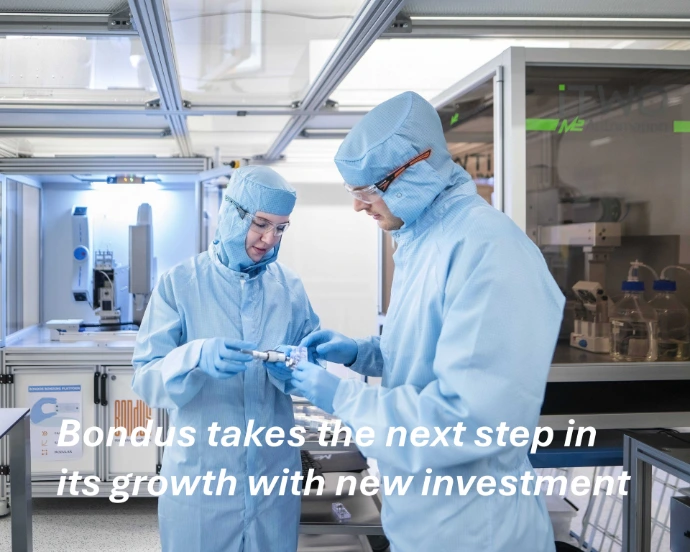
New investment supports Bondus' continued growth
30 October 2025
Bondus has secured a new investment from Oost NL and Ernij Next, supporting the further expansion of our production capabilities. The investment will help us scale our manufacturing technologies and bring more microfluidic innovations from development towards commercial production.
Bondus is taking the next step in its growth with a new investment from Oost NL, through the Innovatiefonds Overijssel, together with Ernij Next. The investment will support the further expansion of Bondus’ production capabilities and help the company prepare for commercialisation of its production technologies.
Bondus develops innovative manufacturing technologies for lab-on-a-chip applications, helping customers turn complex microfluidic designs into scalable products. Our bonding technology enables precise bonding of plastic components while preserving delicate microstructures.
Since our initial funding from Oost NL in 2023, we have made significant progress. Our technology has been validated and patented and is now being used in the production of diagnostic self-tests. To date, we have produced more than 10,000 products for over 15 biotech and pharmaceutical customers.
This investment marks an important milestone for Bondus as we continue to build our manufacturing capabilities and make microfluidic production more scalable and accessible.
Learn more about the investment in the article by Oost NL.

Bas-Jan Hoogenberg, co-founder Bondus, named FD Talent 2024
10 February 2024
Each year, The Financial Daily shines a spotlight on 50 young entrepreneurial talents. With their innovative and distinctive ideas, they are helping propel the world forward. We are proud to announce that co-founder and CEO of Bondus, Bas-Jan Hoogenberg, made this year's list.
The annual FD Talent selection highlights 50 young professionals and entrepreneurs working on innovative ideas and developments across different sectors.
Bas-Jan was recognised for his work at Bondus, where he is helping develop new manufacturing technologies for microfluidic and lab-on-a-chip applications.
Congratulations to Bas-Jan on this recognition.
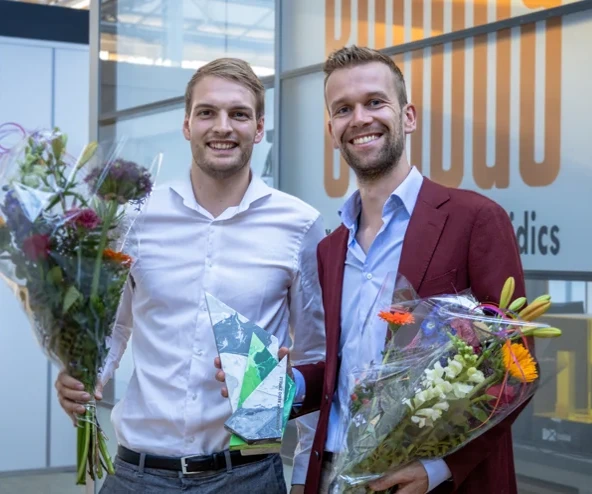
Bondus wins Innovation Award of Regio Zwolle 2023
14 June 2023
Bondus is the winner of the Innovation Award of Region Zwolle 2023 with their sustainable production method for medical point-of-care tests. During the ceremony at BREiNN on Wednesday June 14th, founders Sven Eijpe and Bas-Jan Hoogenberg received the award.
Scalability of the technology
For Bondus, the award marked an important recognition of its approach to making microfluidic manufacturing more scalable and sustainable.
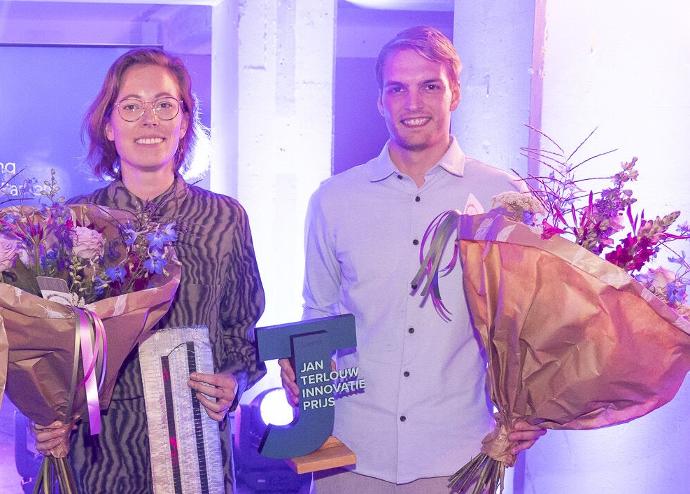
Bondus wins Jan Terlouw Innovation Award 2023
28 September 2023
Bondus was awarded the Jan Terlouw Innovation Award for its innovative approach to lab-on-a-chip manufacturing. The award recognised Bondus’ technology for making microfluidic production more efficient, scalable, and sustainable.
Prize and support
Sustainability and scalability
For Bondus, the award provided recognition for its technology and additional support to further develop the company and bring its innovation to the market.
Bonding recieves financing for further development of bonding technology
13 May 2023
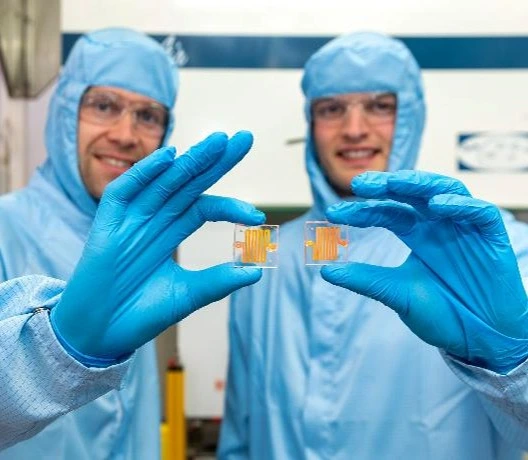
Bondus has received Early Phase Financing (VFF Overijssel) from Oost NL to further develop its innovative bonding technology for microfluidic and medical applications. The funding supports the next stage of development and brings the technology closer to practical application and scalable production.
Bondus is the first company in Overijssel to receive funding through this financing programme. The funding will be used to develop and validate a proof of concept for the technology, with a focus on demonstrating both its technical and commercial feasibility.
From complex bonding to scalable production
Bondus’ technology is designed to join polymer components for microfluidic and lab-on-a-chip devices. These devices can be used to develop advanced diagnostic tests that handle very small amounts of fluids such as blood or urine.
One of the challenges in producing these devices is bonding the different polymer layers together accurately and efficiently. Bondus’ approach aims to reduce this production step from minutes to just a few seconds, helping to simplify manufacturing and reduce production costs.
The VFF financing provides Bondus with the opportunity to further develop the technology and move from an initial concept towards a solution suitable for larger-scale production.
VFF Overijssel is provided by Oost NL and made possible in part by the Ministry of Economic Affairs and Climate and the Province of Overijssel.