Plasma surface treatment for microfluidic manufacturing
Surface properties can significantly influence the manufacturability and performance of microfluidic devices. Wettability, cleanliness and adhesion all affect how polymer components behave during coating, bonding and fluid handling.
Plasma
surface treatment modifies the physical and chemical properties of a material’s
surface by exposing it to ionized gas. For polymer substrates, this treatment
can improve wettability, adhesion and cleanliness, making it a valuable
preparation step before processes such as coating or microfluidic
bonding.
Why use plasma surface treatment?
Plasma treatment activates the surface of a polymer without modifying the entire component. Depending on the material and application, it can support more consistent downstream manufacturing and device performance.
Enhanced surface wettability
Plasma treatment can increase the hydrophilicity of polymer surfaces. This improves how readily water interacts with the surface and can support wetting and capillary filling in microchannels.
The effect can be evaluated by measuring the contact angle of a liquid droplet. A lower contact angle generally indicates a more hydrophilic surface. The increase in wettability and the stability of the hydrophilic property are not only material-dependent but also grade-specific. The reduction in hydrophilicity can be minimized by sealing the material in airtight pouches or under nitrogen.

Untreated - Hydrophobic
- High contact angle: >90° for water
- Poor wettability: liquid beads up on the surface
- Low surface energy: minimal coating adhesion or bonding capability

Partially treated - Moderate wettability
- Moderate contact angle: 40°–90° for water
- Improved wettability compared to untreated surfaces
- Some enhancement in adhesion and bonding, but not fully optimized

Fully treated - Hydrophilic
- Low contact angle: <40° for water
- Excellent wettability: liquid spreads evenly across the surface
- High surface energy: ideal for adhesion, coating, and bonding applications.
Improved adhesion
Surface activation can improve the adhesion of coatings, adhesives and other materials to polymer substrates. This can support more reliable processing and improve the consistency of subsequent manufacturing steps.
For applications involving permanent assembly, plasma treatment can also be used as a preparation step within a suitable microfluidic bonding process
Effective surface cleaning
Plasma treatment can remove organic contaminants from a surface at a microscopic level. Because the process does not require physical contact, delicate features and microstructures can be treated without mechanical cleaning.
Atmospheric plasma treatment at Bondus
At Bondus, we offer atmospheric plasma treatment for polymer and microfluidic components. Unlike vacuum plasma systems, atmospheric plasma treatment operates under normal atmospheric conditions and can be integrated more easily into an industrial production environment.
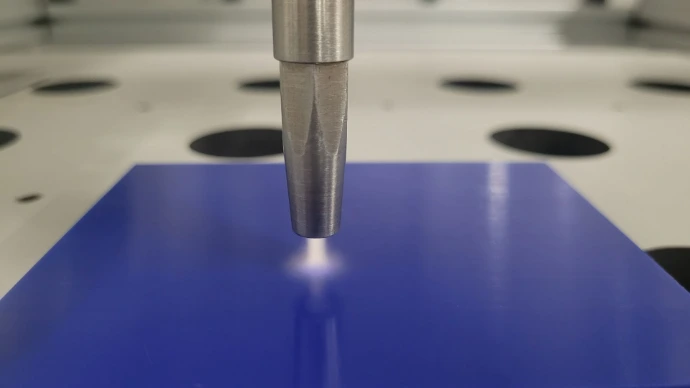
Cost-effective processing
Atmospheric plasma systems can operate using compressed air, depending on the required treatment. This can eliminate the need for costly process gases and vacuum equipment.
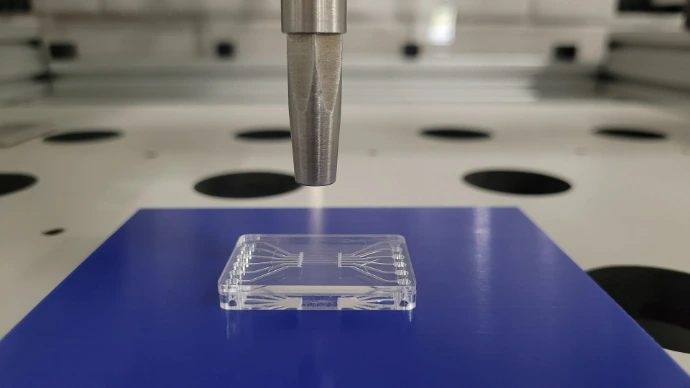
Suitable for automated production
The technology can be incorporated into automated, in-line manufacturing processes. Treatment parameters and tool movement can be controlled to achieve repeatable surface activation across specific areas of a component.
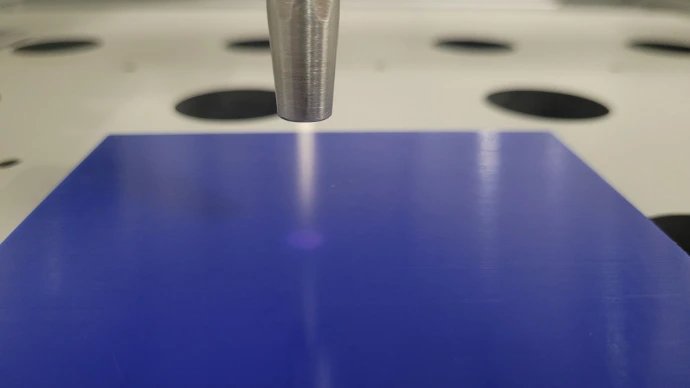
Integrated manufacturing support
Surface treatment is often one step within a larger manufacturing process. By combining atmospheric plasma treatment with our other microfluidic manufacturing capabilities, Bondus can support the transition from individual processing steps to a controlled and scalable production workflow.
Applications of plasma surface treatment
Atmospheric plasma treatment can be used for applications such as:
- Improving the wettability of microchannels
- Preparing polymer components for coating or printing
- Activating surfaces before adhesive bonding
- Removing microscopic organic contamination
- Treating selected areas within a component or device
The suitability of the treatment depends on factors such as the material grade, component geometry, intended bonding or coating process and required surface properties.
Explore plasma treatment for your application
Are surface wettability, adhesion or cleanliness critical to your application? Bondus can help assess whether atmospheric plasma treatment is suitable for your polymer components and how it can be incorporated into your manufacturing process.
Assess your surface treatment needs Discover our manufacturing services
Why Bondus for plasma surface treatment?
With atmospheric plasma equipment in-house, Bondus can incorporate surface activation directly into the manufacturing process of polymer and microfluidic components.
Our team aligns the treatment with the material, component geometry and next production step. This creates an efficient transition to coating, bonding or assembly while keeping process control in one place.
Frequently asked questions
Questions about plasma surface treatment
Atmospheric plasma surface treatment uses ionized gas to modify the outermost layer of a material. It can improve surface wettability, adhesion and cleanliness without changing the complete component.
Many polymers used in microfluidic and technical applications can be plasma treated. The result depends on the material-grade, surface condition and selected process parameters. Bondus assesses the suitability of the treatment for each application..
The effect of plasma treatment can decrease over time. The rate at which this happens depends on the material grade and storage conditions. For that reason, subsequent coating, bonding or assembly steps may need to take place within a defined timeframe.
Yes. Atmospheric plasma treatment can be directed at selected areas of a component. The feasibility depends on the component geometry, accessibility and required treatment pattern.
Yes. Atmospheric plasma treatment is suitable for integration into automated and in-line manufacturing processes. Controlled parameters and repeatable tool movement help support consistent treatment across production batches.